

Veve for Maman Brigit was a durational drawing performed by myself and Roberto N. Peyre as part of the Atis Rezistans-Ghetto Biennale exhibition at RISING festival in June 2023 which took place in the Chapter House of St Paul’s Cathedral in Melbourne. The drawing was made over four days and culminated in a new iteration of Jann Pase’l Pase & Mache Nap Mache (Walk the Walk and Talk the Talk), a work first created by Roberto for the Ghetto Biennale 2013 which we had remade for documenta15 in June 2022.
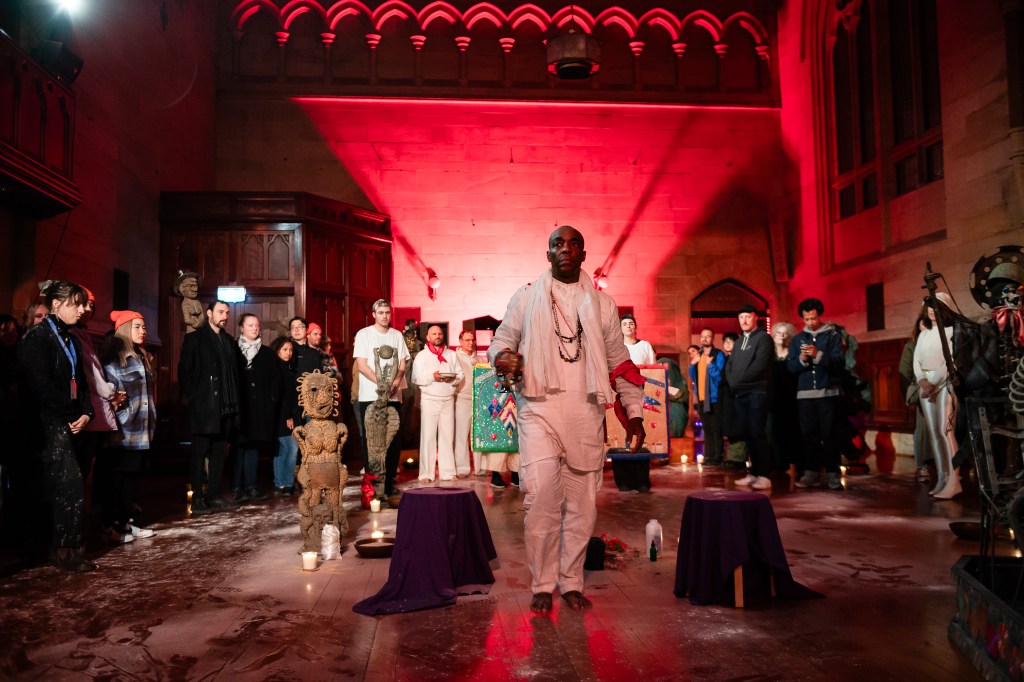
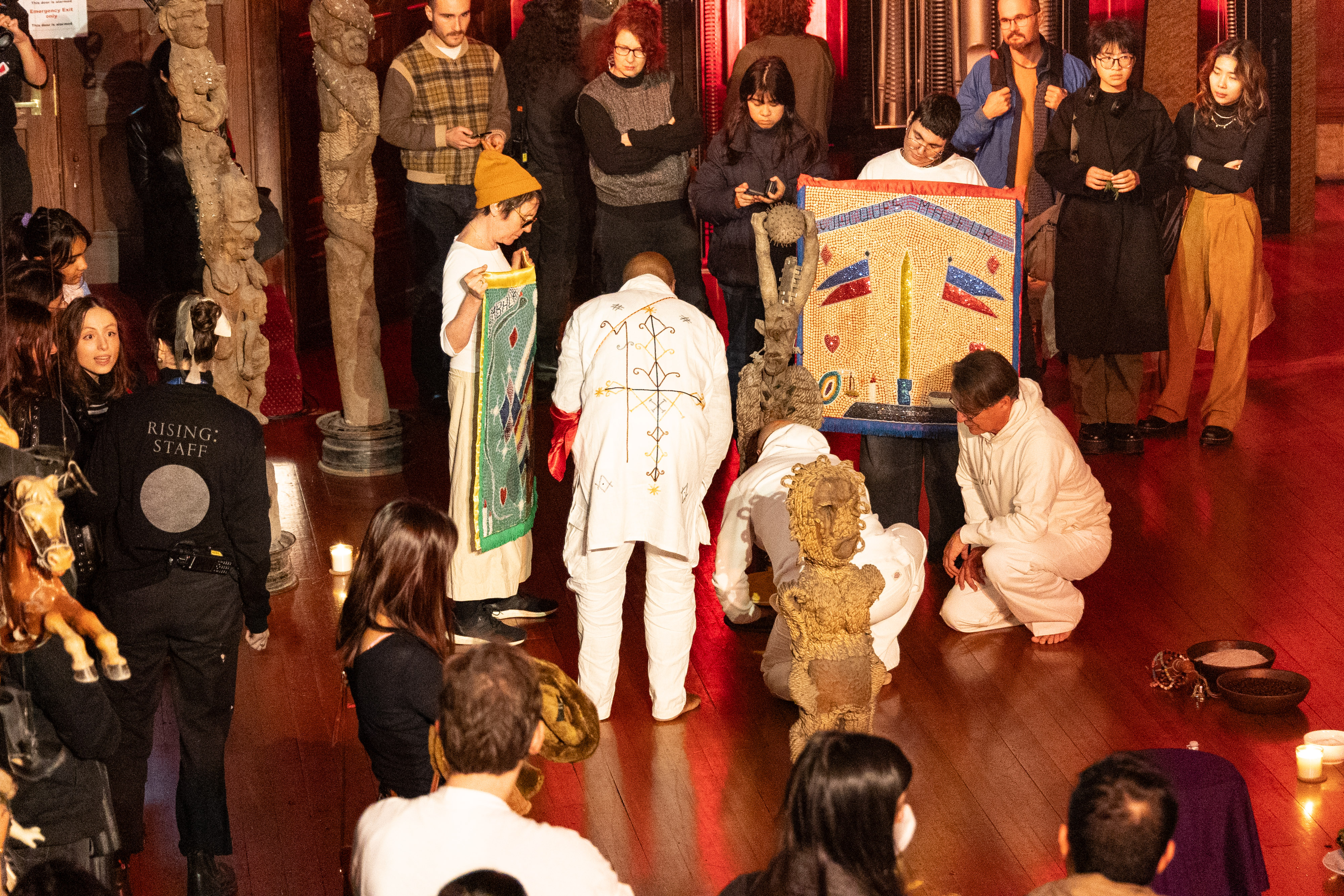
Before we began the drawing Jean-Daniel Lafontant, a houngan, scholar and founder of Temple Na-Ri-VéH 77 in Bel Air (Port-au-Prince), performed an opening ceremony assisted by myself, Roberto, Leah Gordon and members of the Chapter House curatorial team. Roberto and I were instructed to draw veves (ritual diagrams of the Vodou spirits) in cornmeal in front of each of the Atis Rezistans sculptures and Edouard Duval Carrier’s portraits of Dutty Boukman and Toussaint Louverture (two of Haiti’s most important revolutionary leaders).

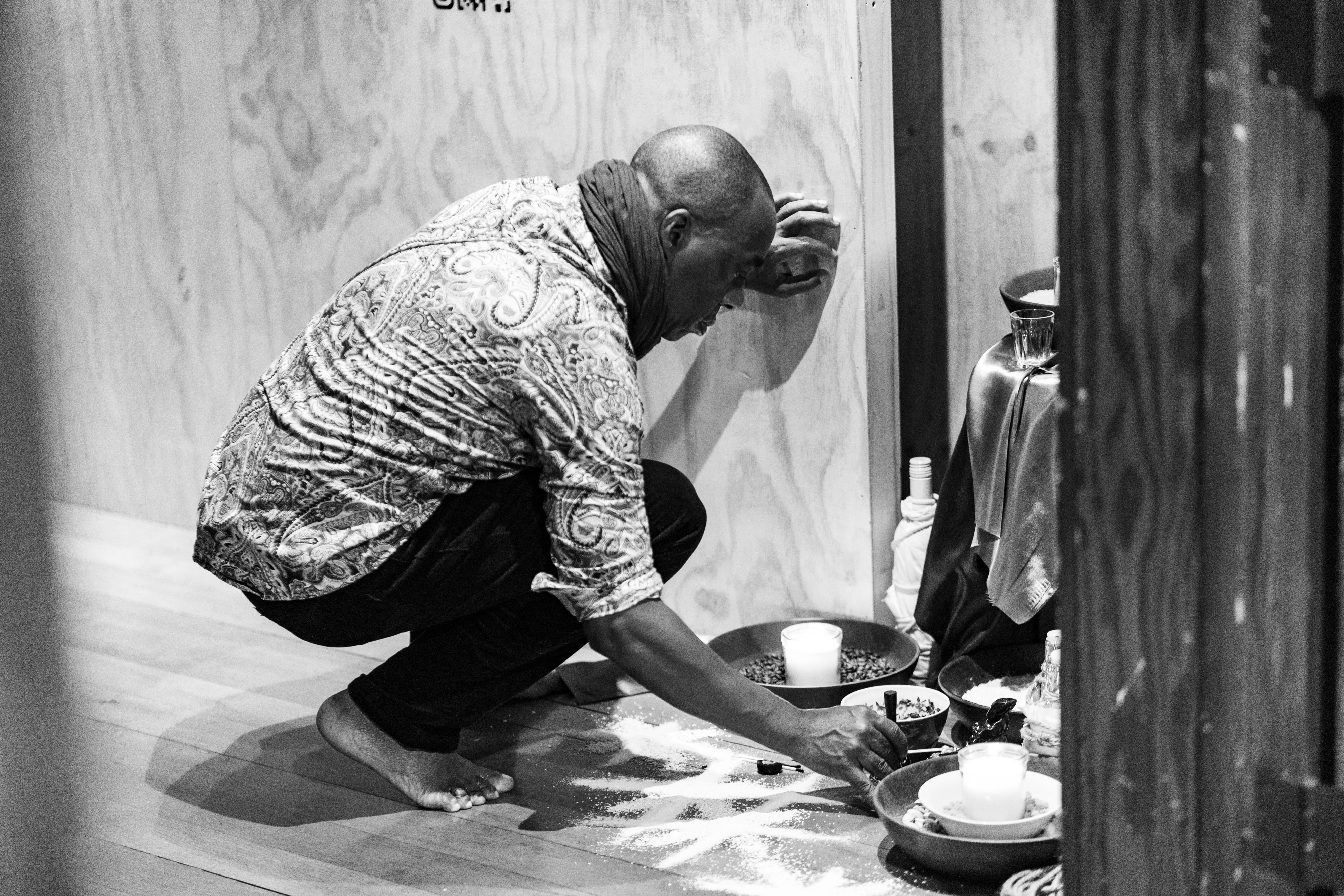
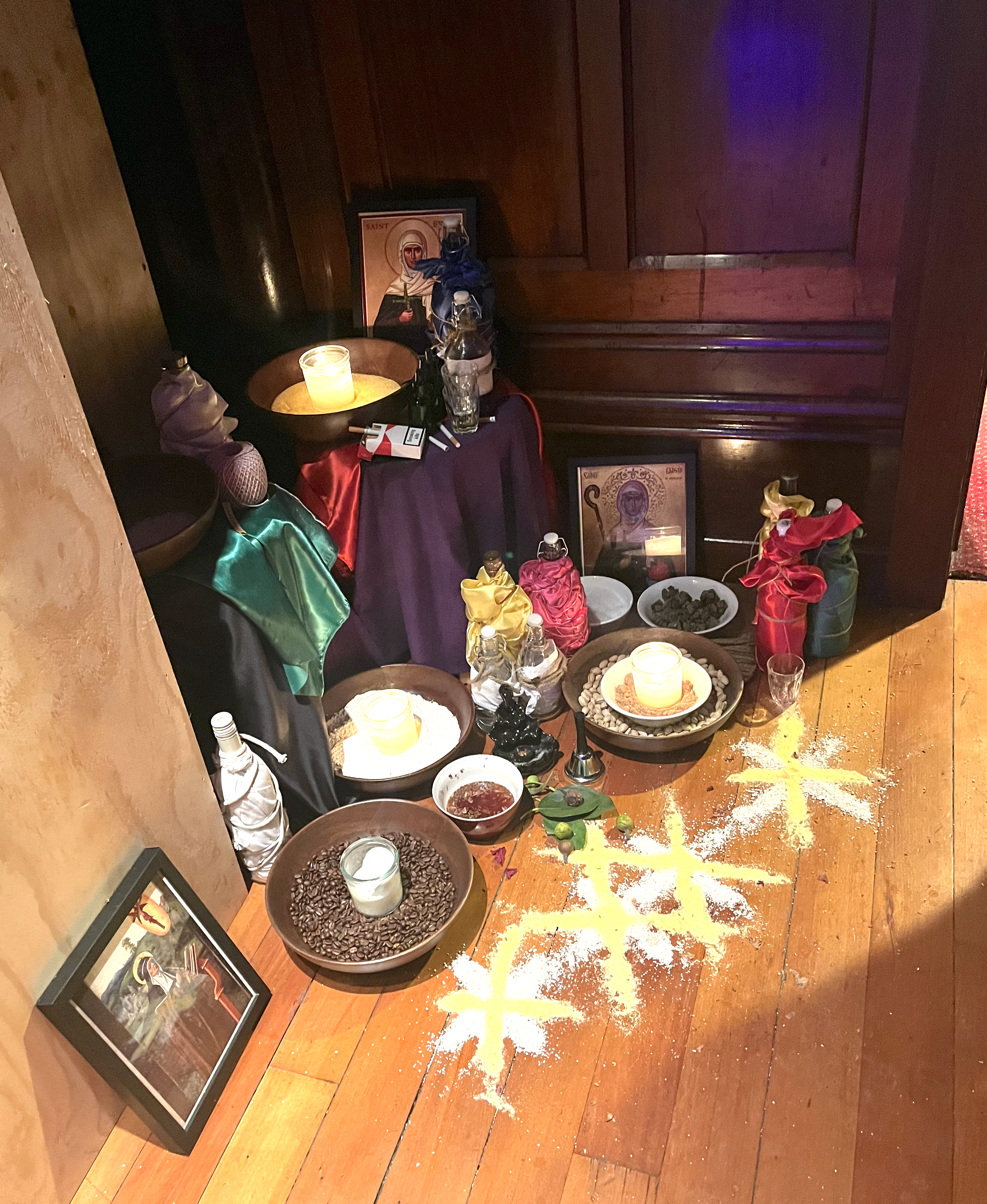
Jean-Daniel also created an altar for Saint Brigid of Kildare beside the entrance to the gallery.


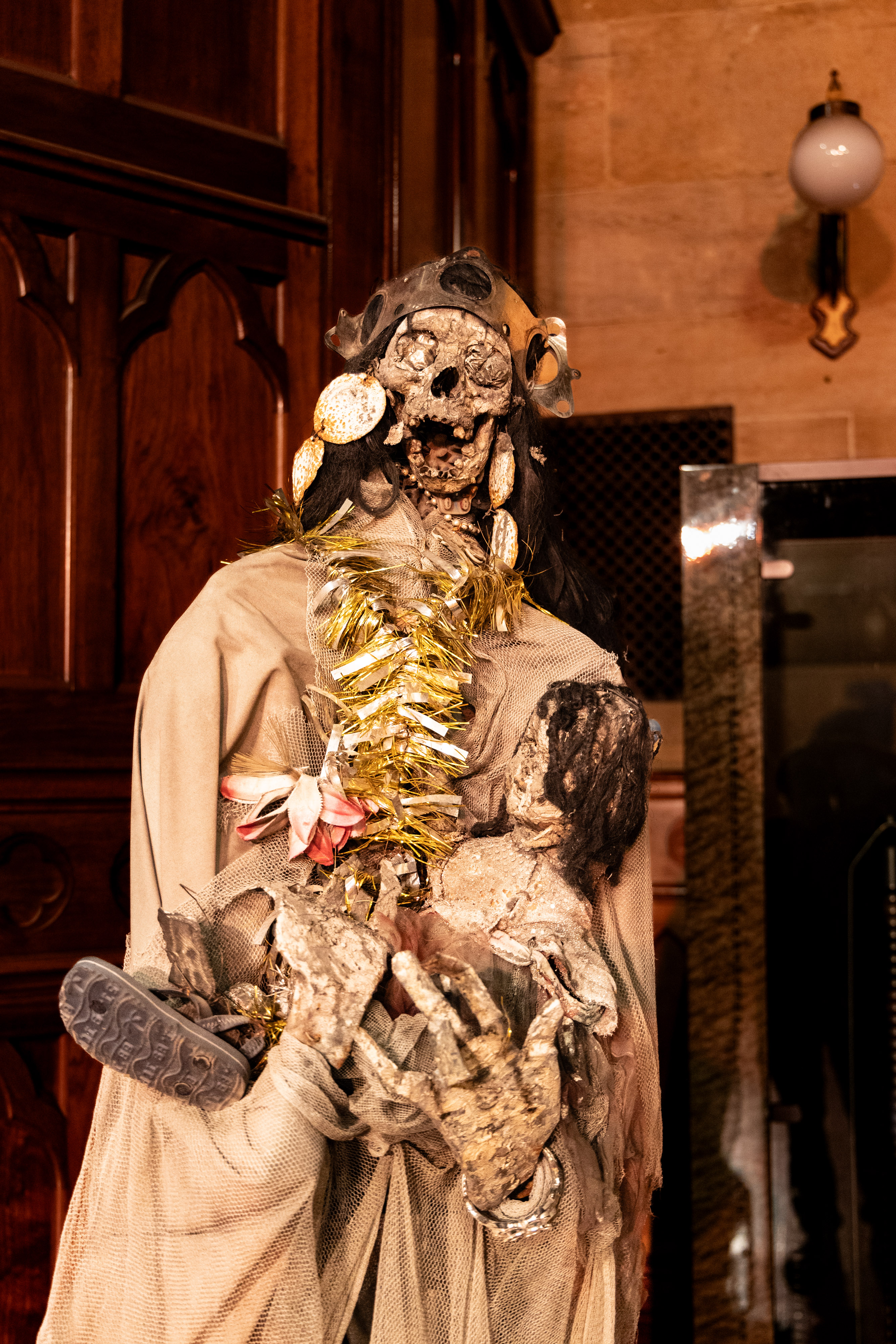
Maman Brigit is a high-ranking loa of the Guede family of spirits in Haitian Vodou whose energy and spirit inform the work of Atis Rezistans. She is the Mother of the Cemetery and wife of Baron Samedi, Ruler of the Cemetery and Lord of the Dead. The first burials in Haitian cemeteries are dedicated to either Baron Samedi or Maman Brigit, depending on the gender of the deceased. In Vodou song Maman Brigit is represented as white, English speaking woman who shares characteristics with St Brigit of Kildare, the patroness saint of Ireland.*
St Brigit’s name derives from the Celtic, pre-Christian mother goddess Brigid, patron of domesticated animals, healing, poetry and smith-craft. She is a member of the Tuatha Dé Danann, a race of supernatural beings from Irish mythology. Her feast day on February 1st, known as Imbolc in the pagan calendar, is a celebration of the arrival of spring and the lambing season. St. Brigit’s symbols include a shepherd’s crook, woven cross and a bowl containing an eternal flame. Her flower is the snowdrop, the first flower to emerge after winter, associated with re-birth and new life and often found in graveyards, hence the nickname ‘corpse flowers’.
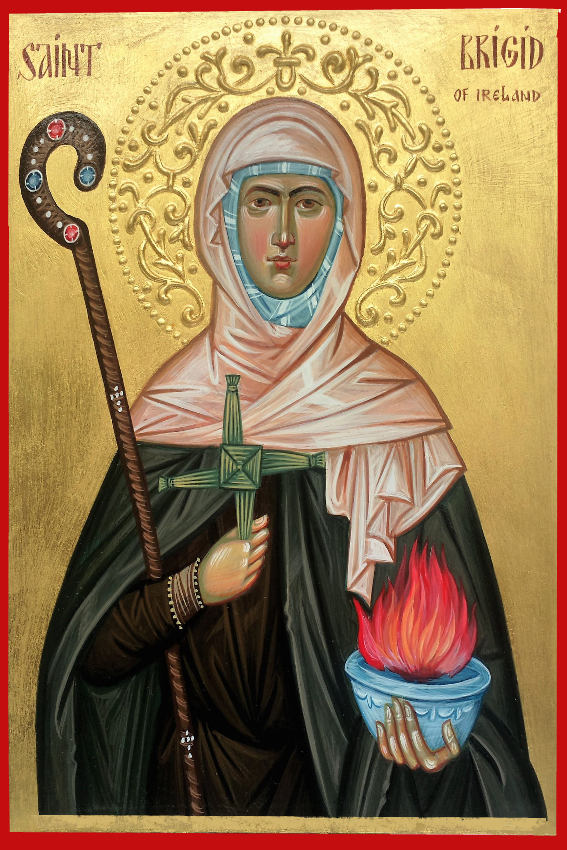

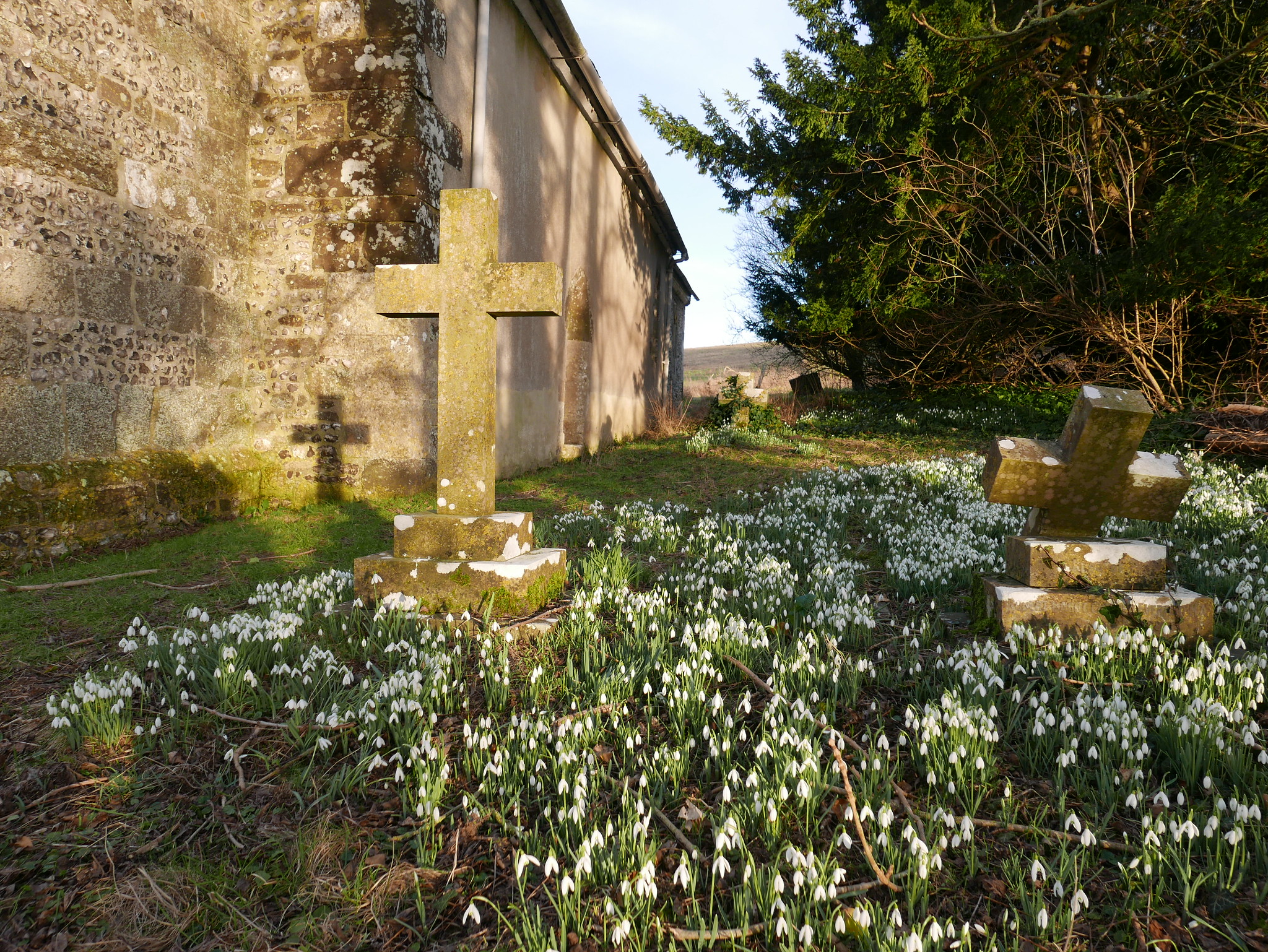
Our drawing combined Maman Brigit’s veve with elements from St Brigit’s iconology (the crook, the cross, the bowl of fire and oak leaves), a schematic map of the Melbourne General Cemetery and an arborglyph found on a tree on Flagstaff Hill: an area known as Brejerrenywun by the Boonwurrung and Woiwurrung people prior to colonisation, site of the first British burial ground in the city and now the Queen Victoria Market.
* I have not been able to find historical or documentary evidence explaining how St Brigid of Ireland came to be associated with Maman Brigit of Haiti. When I asked Jean-Daniel about the association he said that it was likely a “mystical transmission”, by which I understood one occurring on a metaphysical plane of communication.
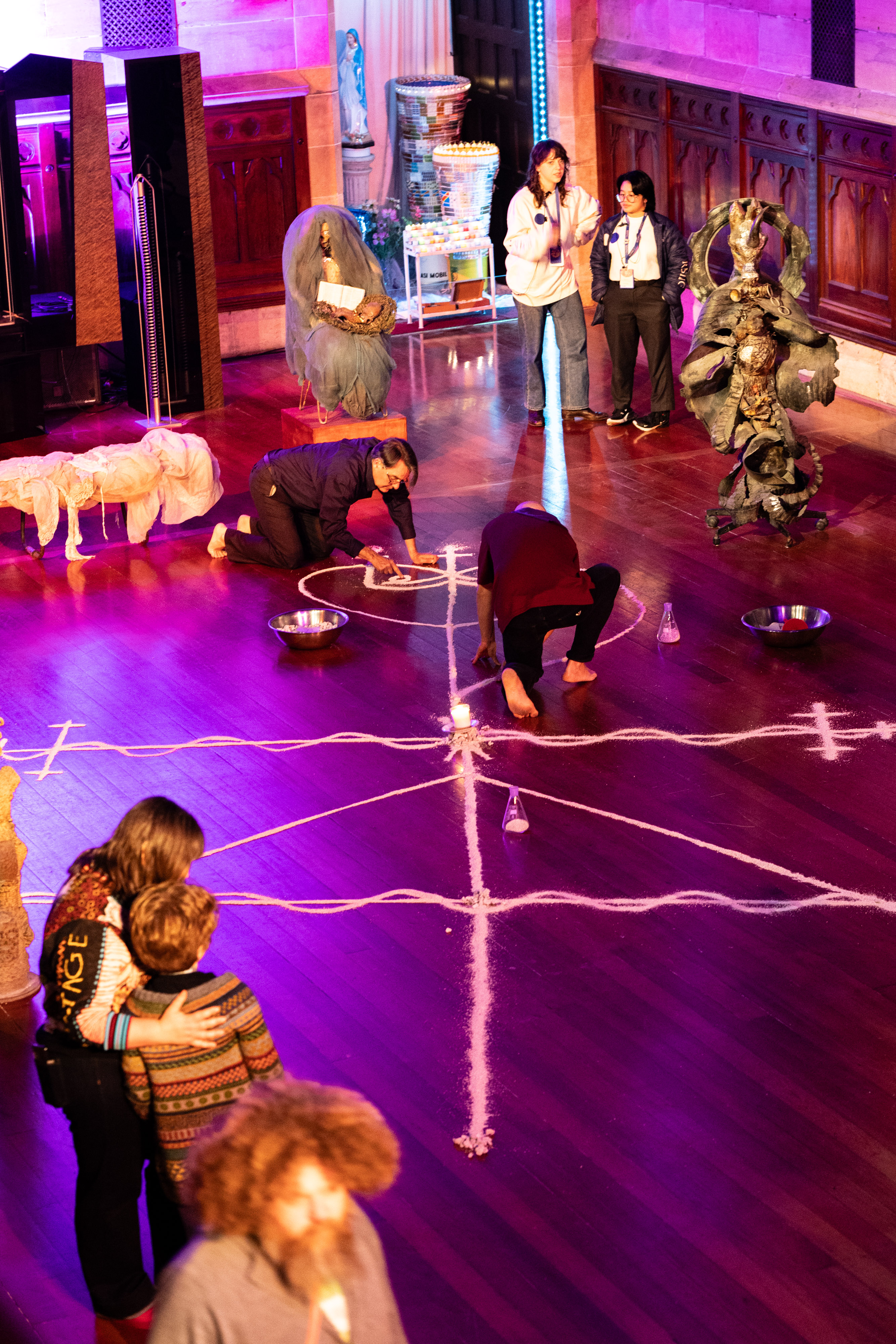

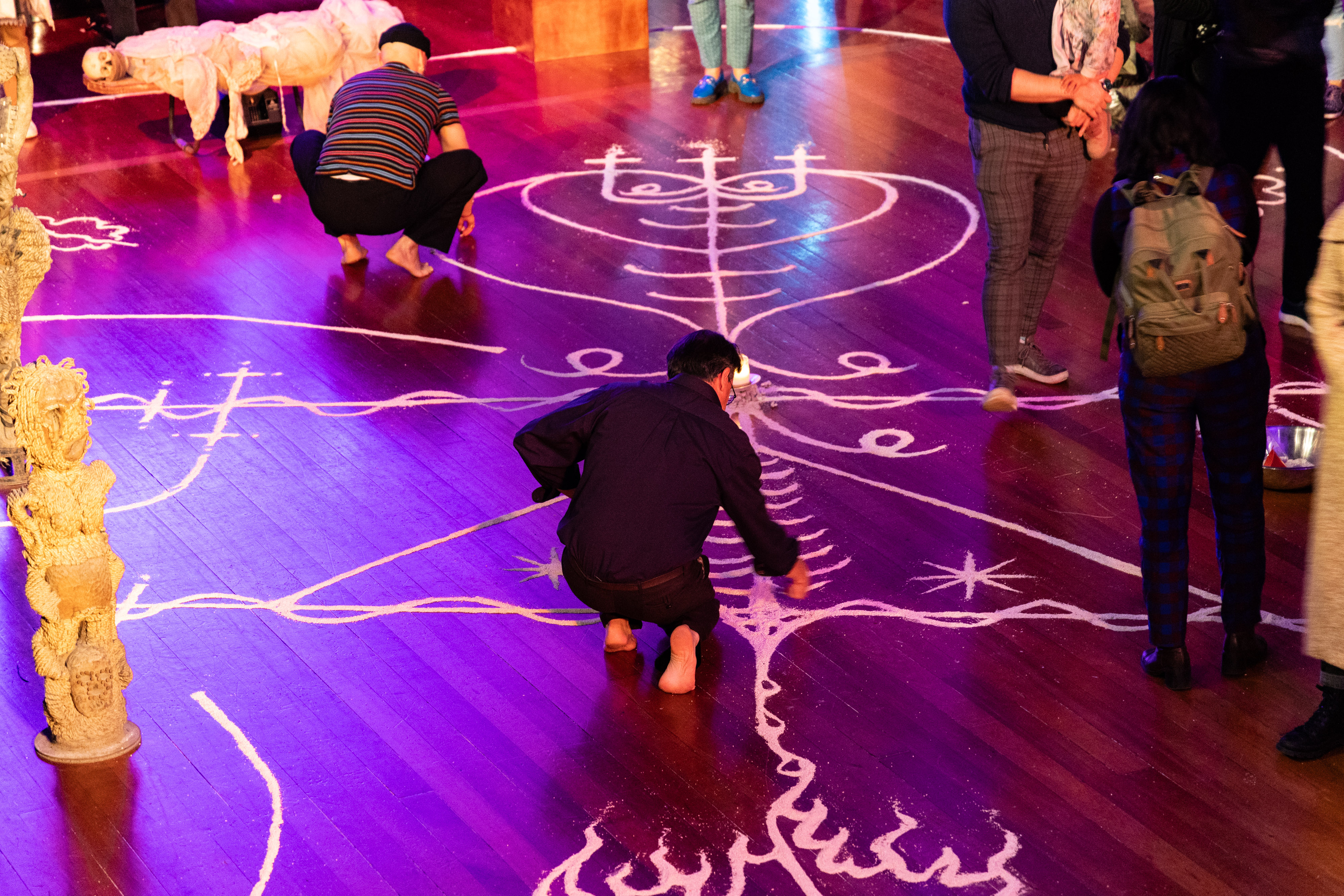
We began our drawing on Thursday the 15th June using coral bone sand and continued developing it during the exhibition opening hours until it was completed on Sunday 18th.
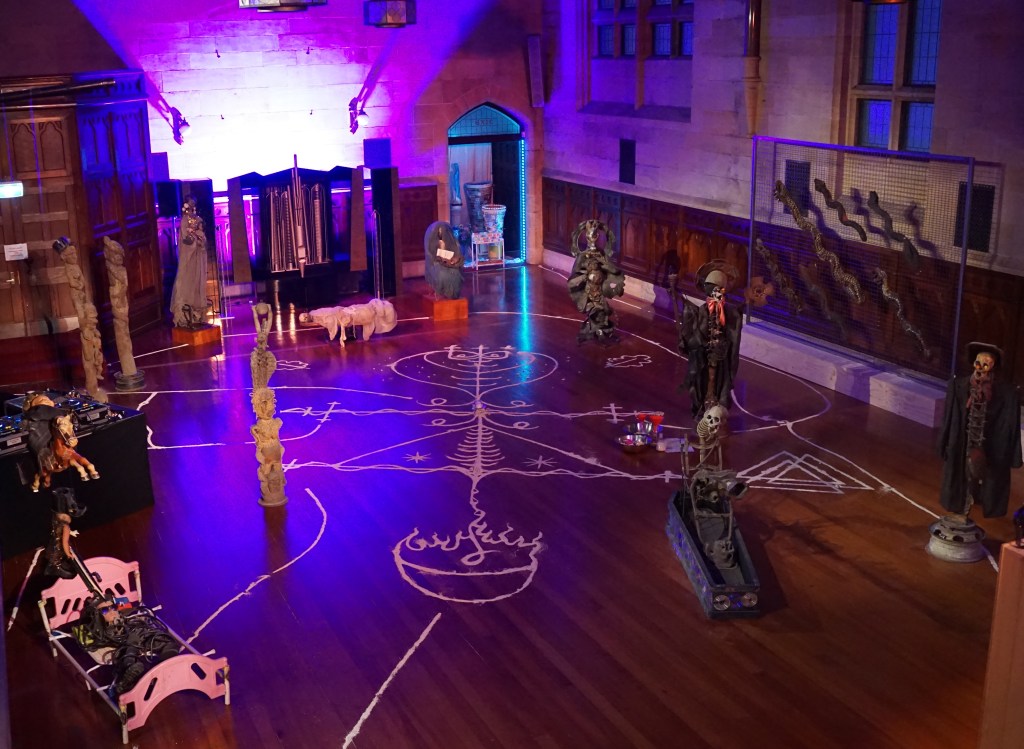
On the final day of the exhibition we re-created Jann Pase’l Pase & Mache Nap Mache (Walk the Walk and Talk the Talk) with a DJ set by the multidisciplinary local artist Lucreccia Quintanilla.

Visitors were welcomed at the door and gently told that they must ‘walk the walk’ to enter the exhibition. Gradually the celebratory atmosphere built up into a party and people danced on the veve until it was obliterated. At the close of the event the coral bone sand was ritually swept up and cleaned away by the myself, Roberto, Jean Daniel and members of RISING curatorial team.
Special thanks to Leah Gordon, Grace Herbert, Jean-Daniel Lafontant, Lucreccia Quintanilla, Ari Tampubolon and the Chapter House curatorial team at RISING.
Photographic documentation courtesy of Oscar Lewis and Andrew Rewald.
AYIBOBO!

 JOHN CUSSANS